
What is SEO? A Beginner’s Guide to Search Engine Optimization
Search Engine Optimization (SEO) is the process of improving your website so that it attracts more organic (unpaid) visitors from search engines like Google, Bing, or Yahoo. When people search for products, services, or information related to your business, having good SEO means your website will appear higher up in the search results.
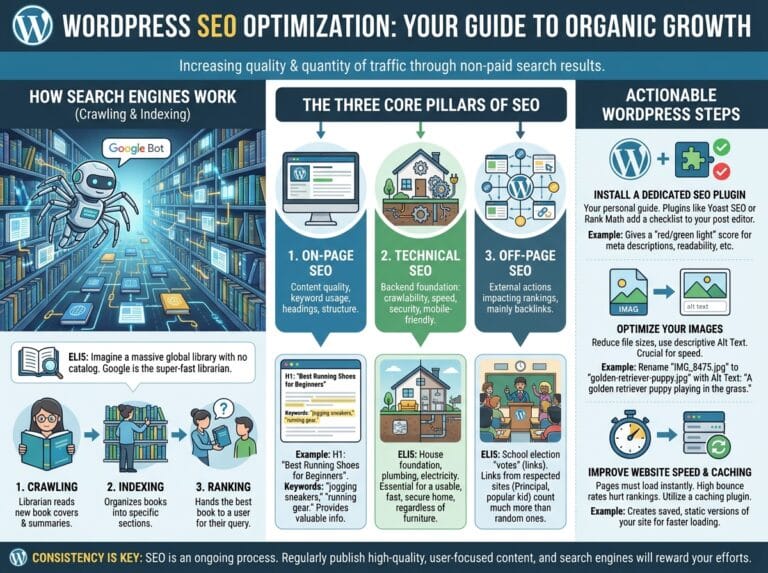
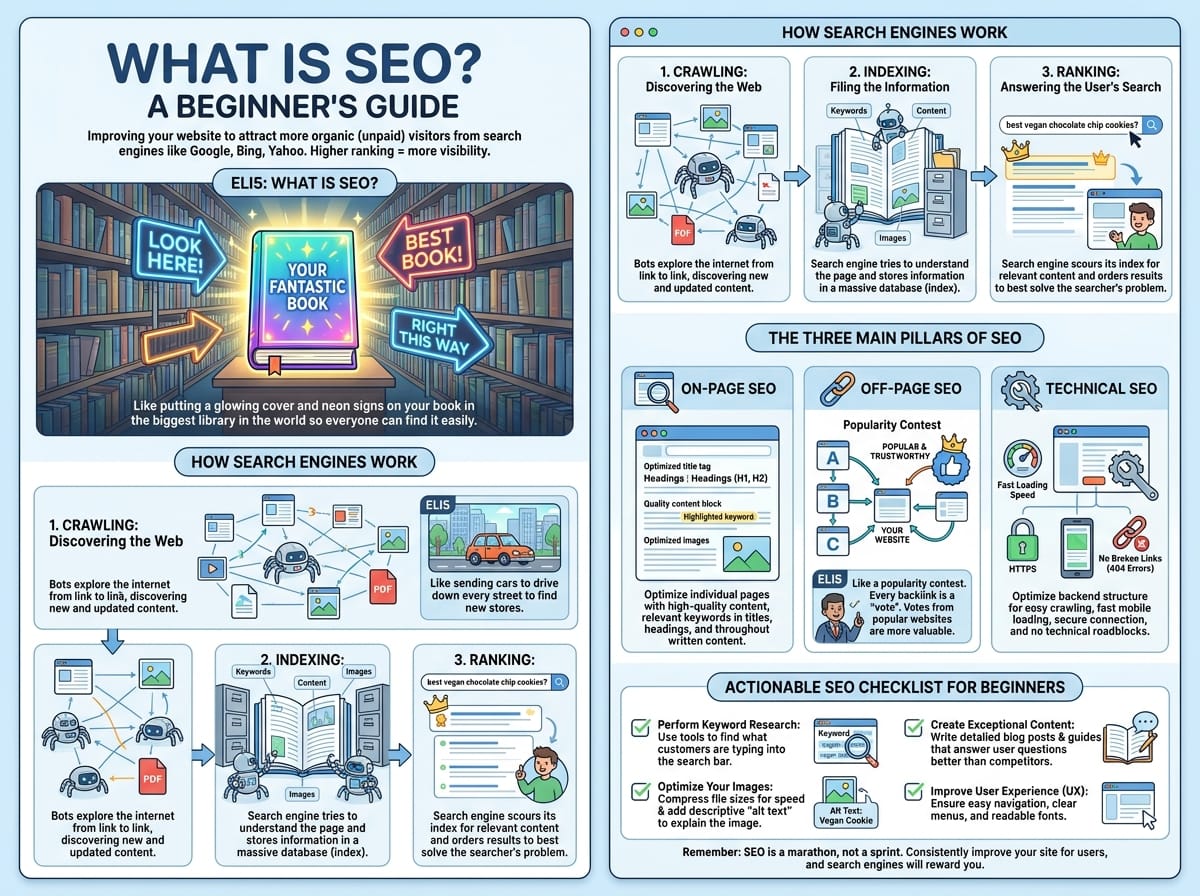
Imagine you wrote a fantastic book and put it in the biggest library in the world. But there’s a problem: there are billions of other books, and there is no librarian to help people find yours. SEO is like putting a brightly colored, glowing cover on your book, placing it on the exact right shelf, and putting up big neon signs pointing straight to it so everyone can find it easily.
How Do Search Engines Actually Work?
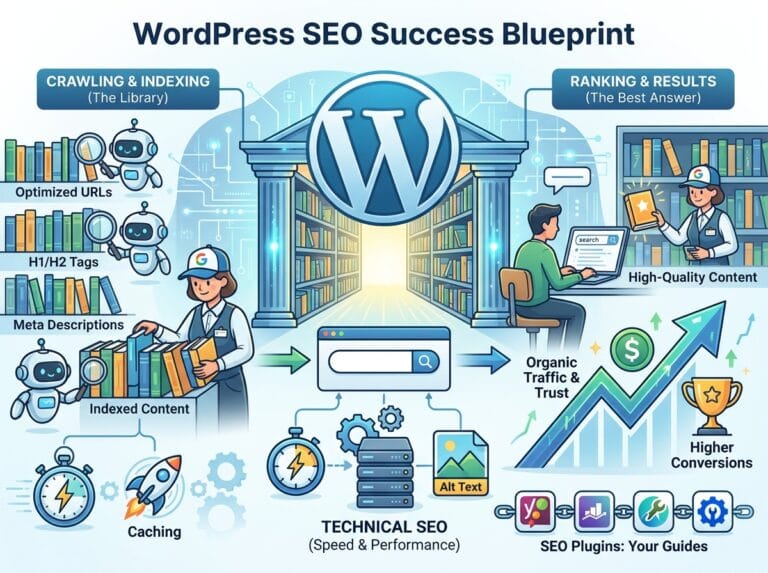
To master SEO, you first need to understand how search engines operate behind the scenes. Search engines perform three primary functions to deliver results to users: crawling, indexing, and ranking.
1. Crawling: Discovering the Web
Search engines send out automated robots (often called crawlers or spiders) to explore the internet. These bots move from link to link, discovering new and updated content, such as web pages, images, videos, and PDF files.
2. Indexing: Filing the Information
Once the robots find a page, the search engine tries to understand what it is about. It processes the text, images, and video files on the page and stores this information in a massive database called an index.
Think of the internet as a giant, ever-growing city. Crawling is like sending out a fleet of cars to drive down every single street to see what new stores have opened. Indexing is like taking all the information those cars collected and printing a massive phone book so people know exactly what stores exist and what they sell.
3. Ranking: Answering the User’s Search
When someone types a question into Google, the search engine scours its massive index for highly relevant content. It then orders that content in a way that best solves the searcher’s problem. This ordering of search results by relevance and authority is known as ranking.
The Three Main Pillars of SEO
If you want to rank highly on search engines, you cannot just rely on luck. You need a structured approach focusing on the three main pillars of SEO.
On-Page SEO
On-page SEO involves optimizing the individual pages on your website so they rank higher and earn more relevant traffic. This means making sure your content is high-quality and directly answers what people are searching for.
Example: If you run a bakery that sells vegan chocolate chip cookies, you would want to naturally include phrases (keywords) like “best vegan chocolate chip cookies” and “dairy-free cookie bakery” in your page titles, headings, and throughout your written content.
Off-Page SEO
Off-page SEO refers to actions taken outside of your own website that impact your rankings. The most significant factor here is “backlinks”—which is when other websites link back to your website.
Think of the internet like a giant high school popularity contest. Every time another website links to yours, it is like them casting a “vote” for you. If a really popular, trustworthy website (like the school president) votes for you, Google thinks, “Wow, they must be important!” and moves your website up in the search rankings.
Technical SEO
Technical SEO involves optimizing your website’s backend structure and foundation. It ensures search engines can easily read, navigate, and process your site without any roadblocks.
Example: Technical SEO includes making sure your website loads incredibly fast on mobile phones, has a secure connection (HTTPS rather than HTTP), and does not contain broken links that lead users to “404 Error” pages.
Actionable SEO Checklist for Beginners
Ready to start optimizing your site? Here are a few foundational steps you can take today to improve your website’s search engine visibility:
- Perform Keyword Research: Use tools like Google Keyword Planner to find out exactly what words your customers are typing into the search bar.
- Create Exceptional Content: Write detailed blog posts and guides that answer your customers’ questions better than your competitors do.
- Optimize Your Images: Compress your image file sizes so your site loads faster, and add descriptive “alt text” to explain what the image is to search engines.
- Improve User Experience (UX): Ensure your website is easy to navigate, has clear menus, and uses readable fonts.
Remember, SEO is a marathon, not a sprint. By consistently making your website better, faster, and more informative for your users, search engines will naturally start to reward you with higher rankings and more traffic.