
If you are building a website for the first time, you have likely encountered confusing technical jargon. One of the most critical decisions you will make is choosing the right foundation for your site. Understanding how this underlying technology works is the first step toward online success, higher search engine rankings, and a better experience for your visitors.
What Exactly is Web Hosting?
Every website on the internet is made up of files—images, text, code, and databases. These files need a physical place to live so that anyone around the world can access them at any time. Web hosting companies own massive, powerful computers called servers. When you buy a hosting plan, you are renting space on one of these servers to store your website’s files.
ELI5 (Explain Like I’m 5): Imagine your website is a house. To build a house, you need a plot of land to put it on. Web hosting is that plot of land on the internet. Your domain name (like www.yoursite.com) is the street address that tells people where to find your house.
The Main Types of Web Hosting
Not all hosting plans are created equal. Depending on the size of your website and the amount of traffic you expect, you will need to choose a specific type of hosting environment.
Shared Hosting
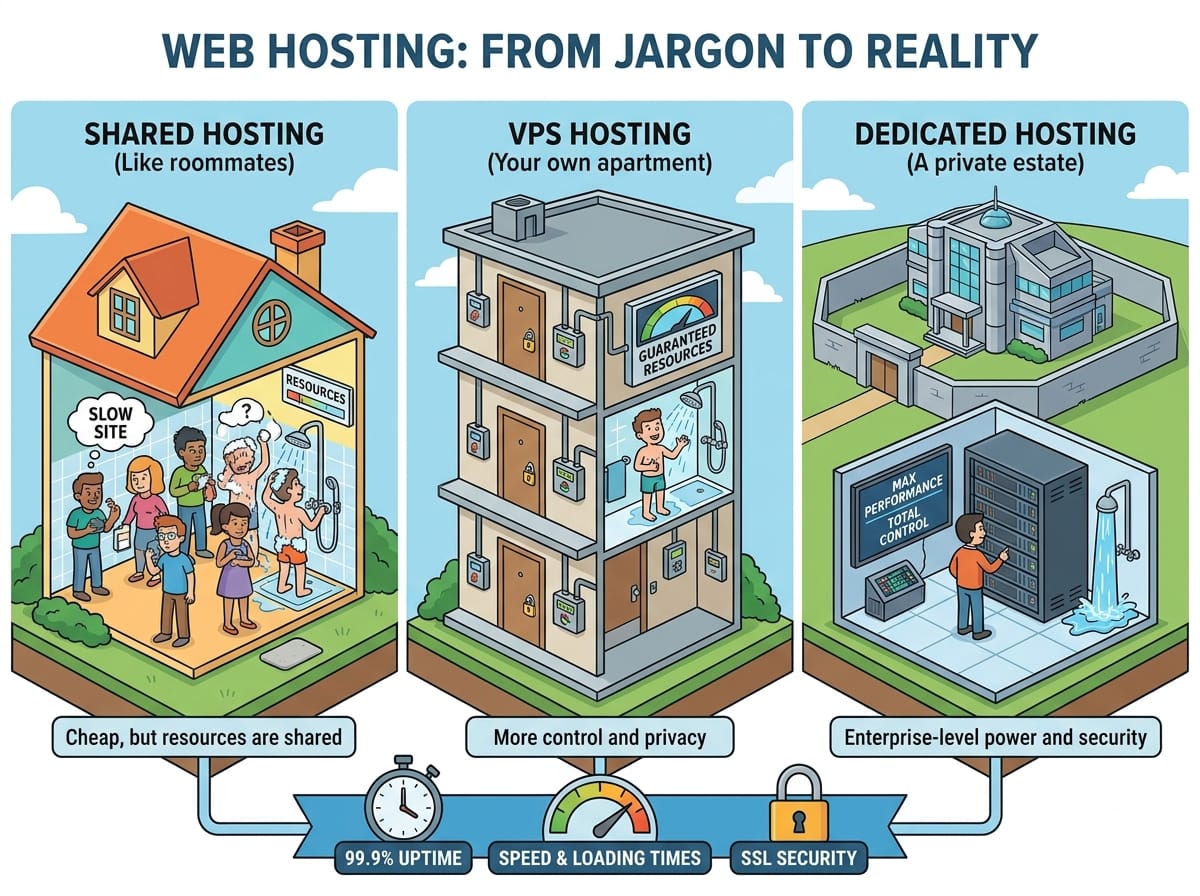
Shared hosting is the most common and affordable option for beginners. In this setup, your website lives on the same server as hundreds of other websites. You all share the server’s resources, such as memory (RAM) and processing power (CPU).
Example: If you are starting a personal blog or a small portfolio site that gets fewer than 10,000 visitors a month, shared hosting is a cost-effective starting point.
ELI5: Shared hosting is like living in a house with several roommates. It is cheap, but if one roommate uses all the hot water (takes up all the server resources), your shower will be freezing cold (your website will slow down).
VPS (Virtual Private Server) Hosting
VPS hosting provides a middle ground between shared and dedicated hosting. While you still share a physical server with other users, the hosting company uses software to divide the server into virtual compartments. You are guaranteed a dedicated portion of the server’s resources.
ELI5: VPS hosting is like living in an apartment building. You share the overall building with others, but you have your own secure, locked apartment. No matter what your neighbors are doing, they cannot use your electricity or hot water.
Dedicated Server Hosting
With dedicated hosting, you rent an entire physical server exclusively for your website. You have complete control over the server’s configuration, software, and security. This is designed for enterprise-level businesses or massive e-commerce sites.
Example: A massive online retailer like Amazon or a high-traffic news website requires dedicated servers to handle millions of visitors simultaneously without crashing.
Crucial Factors When Choosing a Hosting Provider
Selecting the right host directly impacts your website’s Search Engine Optimization (SEO). Search engines like Google prioritize websites that provide a great user experience. Here is what you need to look for.
Uptime Reliability
Uptime refers to the percentage of time your website is online and accessible. If your site frequently goes down, search engines will notice, and your rankings will suffer. Always look for a host that guarantees at least 99.9% uptime.
Speed and Loading Times
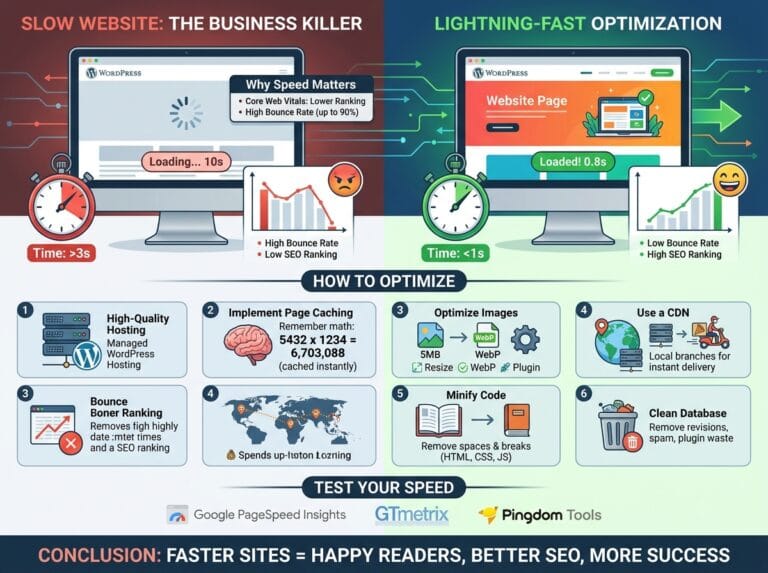
Site speed is a confirmed Google ranking factor. If your hosting server is slow, your website will take too long to load. Visitors will hit the “back” button (increasing your bounce rate), which signals to search engines that your site is not helpful.
Example: Research shows that if a page takes longer than 3 seconds to load, over 50% of mobile users will abandon the site. Fast web hosting directly prevents this loss of traffic.
Security and SSL Certificates
Search engines prioritize safe websites. A good hosting provider should offer automated backups, malware scanning, and free SSL certificates.
ELI5: An SSL certificate is like a secret decoder ring between your website and your visitor’s computer. It scrambles sensitive information—like passwords and credit card numbers—so that hackers cannot read the data while it travels across the internet. You can tell a site has an SSL certificate if the URL starts with “https” instead of “http”.
Taking the Next Step
Choosing the right web hosting is the bedrock of your website’s performance and SEO strategy. By understanding your own needs—whether it is the cost-efficiency of shared hosting or the robust power of a dedicated server—you can build a fast, secure, and highly-ranked website.