

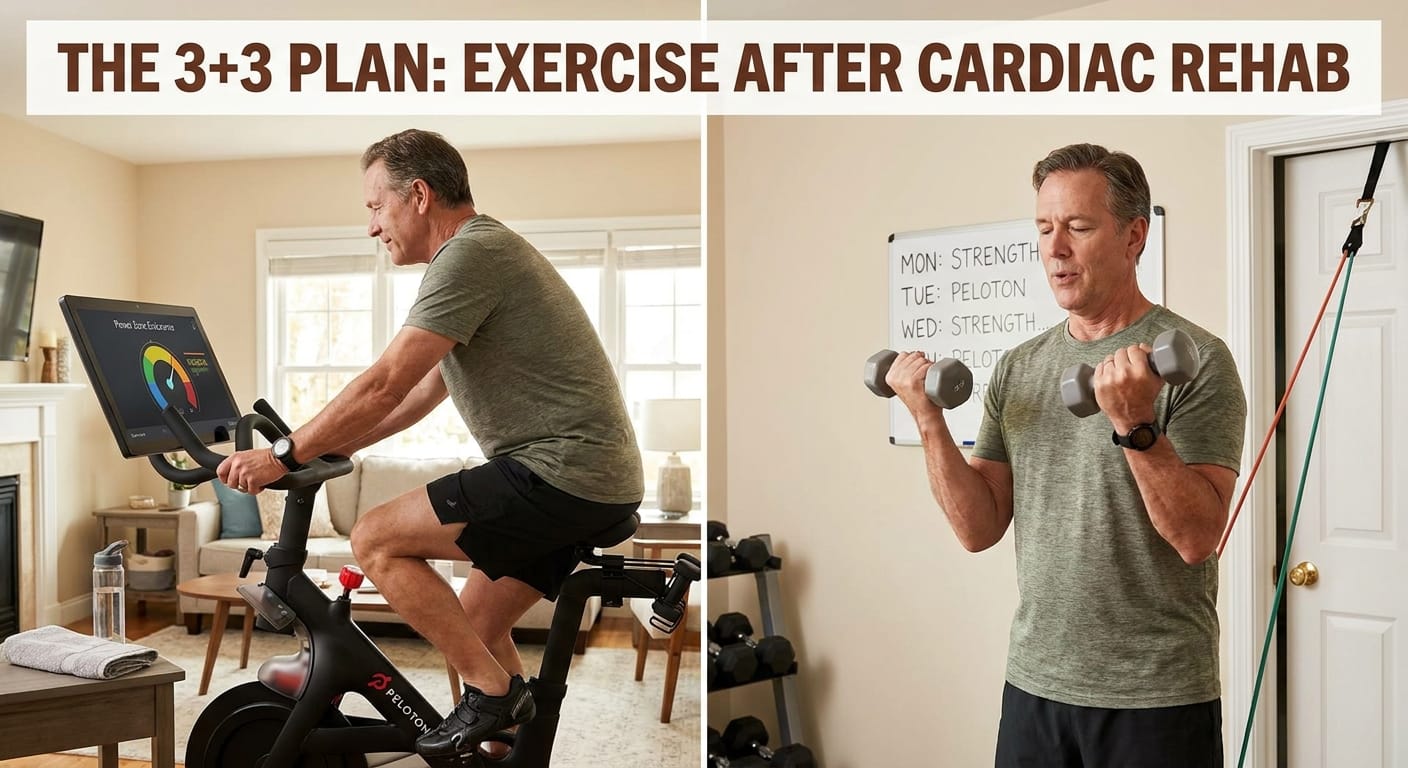
Graduating from cardiac rehabilitation is a strange, paradoxical milestone. You are stronger and more confident than you have been in months, but suddenly the rigid structure, the sticky ECG monitors, and the reassuring supervision of the nurses are gone. The question every rehab graduate faces is exactly the same: now what?
After completing my own 12-week rehab stint following a coronary artery bypass graft (CABG) surgery, I found myself staring at my home gym equipment with a mix of excitement and anxiety. Working out after heart surgery outside of a hospital setting requires a complete mental shift. After plenty of trial and error, I landed on a deceptively simple answer that bridged the gap between recovery and everyday fitness: three days a week on the Peloton, and three days a week of light resistance training with high repetitions.
It is not a bodybuilder’s program. It is not an elite cyclist’s program. It is a program built entirely around the two things a recovering heart actually needs: consistent moderate cardio to keep the cardiovascular system adapting, and gentle, progressive strength work to rebuild the muscle that illness and inactivity quietly took away.
The Post-Rehab Void: Surviving the First Workout Back
My first workout alone in my basement was intimidating. During rehab, if my heart rate spiked or I felt a twinge in my chest, a trained professional was staring at a screen reading my exact telemetry. At home, it was just me and my Apple Watch. I quickly realized that continuing my exercise after cardiac rehab meant I needed a structured plan that removed the guesswork and prevented my ego from taking over.
I needed a routine that fostered intensity discipline. The goal was no longer setting personal records; the goal was consistency and longevity. That is how the 3+3 Plan was born.
The 3+3 Plan: Balancing Exercise After Cardiac Rehab
The 3+3 plan alternates between cardiovascular conditioning and muscular endurance. Alternating cardio and lifting days gives each bodily system adequate recovery time while creating a six-day rhythm that is incredibly easy to sustain. This “restrained” program is not a consolation prize for heart patients—it is genuinely effective.
ELI5: The Plumbing and the Building (High School Level)
ELI5: Think of your cardiovascular system like a city’s plumbing network. Cardio exercise (like cycling) acts like a maintenance crew that widens the pipes and trains the main water pump (your heart) to move more water with less effort. Strength training, on the other hand, reinforces the buildings (your muscles) that the plumbing supplies, so they don’t demand as much energy to function.
But there is a catch: if you hold your breath while lifting heavy weights—a natural reflex known as the Valsalva maneuver—you temporarily clamp down on those pipes. This creates a massive, sudden spike in water pressure. For a newly repaired pump, that pressure spike is dangerous. That is why post-rehab strength training focuses on lighter weights while constantly exhaling during the hardest part of the lift. It keeps the pipes open, the pressure stable, and the pump safe.
The Cardio Protocol: Navigating Peloton Cardiac Recovery
The cardio half of this program leans heavily on the most valuable lesson rehab taught me: keeping my heart rate in a moderate, controlled zone. Wearing a reliable heart rate monitor and staying under the strict ceiling set by my cardiac team turns the Peloton from an intimidating, highly competitive leaderboard machine into a precision recovery tool.
For Peloton cardiac recovery, Power Zone Endurance (PZE) rides are the absolute gold standard. These classes are steady, structured, conversational-pace efforts that build aerobic capacity without the dangerous cardiovascular spikes found in HIIT (High-Intensity Interval Training) or Tabata rides.
- Ignore the Leaderboard: Swipe it away immediately. Your only competition is your own heart rate zone.
- Zone 2 and Zone 3 Focus: Keep your effort level moderate. You should be able to speak in full sentences while riding.
- Target Visceral Fat: Three consistent rides a week maintains the aerobic base rehab built and specifically targets visceral fat—the internal belly fat that poses the greatest risk for future heart disease.
The Strength Protocol: Safe Strength Training After Heart Surgery
The strength half of the week follows the exact same philosophy of disciplined restraint. Strength training after heart surgery is crucial because cardiovascular disease and subsequent bed rest cause significant muscle atrophy. However, the way you lift must change.
Instead of lifting heavy barbells for sets of 5 reps, transition to lighter dumbbells, resistance bands, or weight machines. The goal is to perform 12 to 15 slow, controlled repetitions. High-rep, moderate-load training builds real, functional muscle, especially for anyone returning after a long medical layoff.
Crucial Lifting Mechanics
The most important part of this protocol is your breathing. As explained earlier, you must never strain or hold your breath. Always exhale through the effort (the concentric part of the movement). If you are doing a dumbbell chest press, inhale as you lower the weights, and exhale audibly as you push them up. If the weight is so heavy that you feel forced to hold your breath to complete the rep, the weight is too heavy for your current heart health. Drop the weight by 5 pounds and try again. Fitness apps that generate circuits based on the equipment you have available make planning these lighter, high-rep workouts nearly automatic.
Sample Weekly Schedule: The 6-Day Rhythm
To give you an idea of how this looks in practice, here is the exact schedule I use to balance my exercise after cardiac rehab. It provides ample recovery and ensures no single muscle group or energy system is overworked.
| Day | Workout Type | Details & Intensity |
|---|---|---|
| Monday | Strength Training | Upper body and core. Dumbbells/bands. 3 sets of 12-15 reps. Focus on exhaling. |
| Tuesday | Cardio (Peloton) | 30-45 Minute Power Zone Endurance Ride. Strict adherence to heart rate ceiling. |
| Wednesday | Strength Training | Lower body focus. Goblet squats, lunges, calf raises. Light weight, 12-15 reps. |
| Thursday | Cardio (Peloton) | 30 Minute Low Impact Ride. Active recovery pace, highly conversational. |
| Friday | Strength Training | Full body circuit. Light machines or bands. Keep rest periods to 60 seconds. |
| Saturday | Cardio (Peloton) | 45 Minute Power Zone Endurance Ride. Steady, sustained cardiovascular effort. |
| Sunday | Active Rest | Light walking, stretching, or yoga. No heart rate elevation. |
Sustainability is the Ultimate Goal
When you are working out after heart surgery, sustainability is the entire point. Medical research on cardiac outcomes heavily rewards the person who is still exercising consistently in year five, not the person who went the hardest in month two and burned out (or injured themselves).
If you are coming out of rehab, make an appointment to talk to your care team first. Get your specific, individualized numbers—your absolute heart rate ceiling and any lingering lifting restrictions based on your sternum healing. Once you have those boundaries, build a boring, repeatable week around them. It may not make for a thrilling fitness montage, but boring, structured consistency is exactly what your newly repaired heart wants.