
Understanding Search Engine Optimization: The Ultimate Beginner’s Guide
If you have a website, you have likely heard the term SEO thrown around. Search Engine Optimization is the backbone of online visibility. Without it, even the most beautifully designed websites will remain hidden in the dark corners of the internet. In this comprehensive guide, we are going to break down exactly what SEO is, how it works, and how you can use it to rank on the first page of search engines like Google.
ELI5: What is SEO?
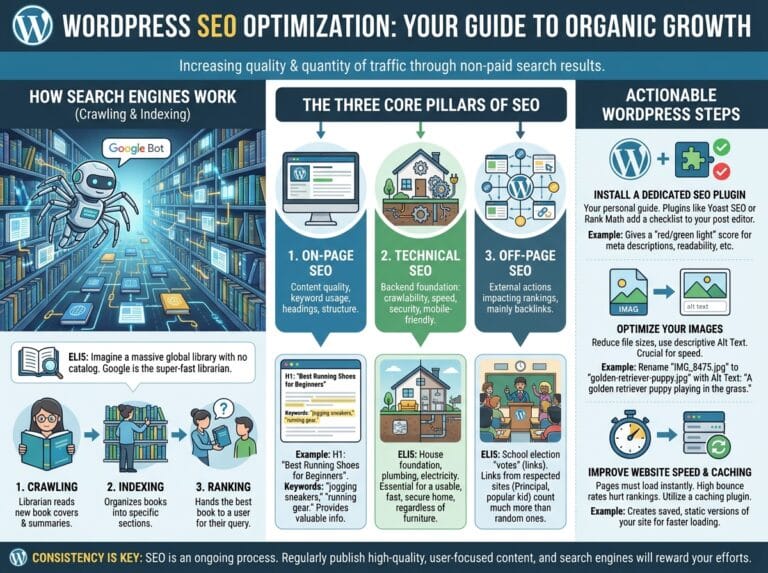
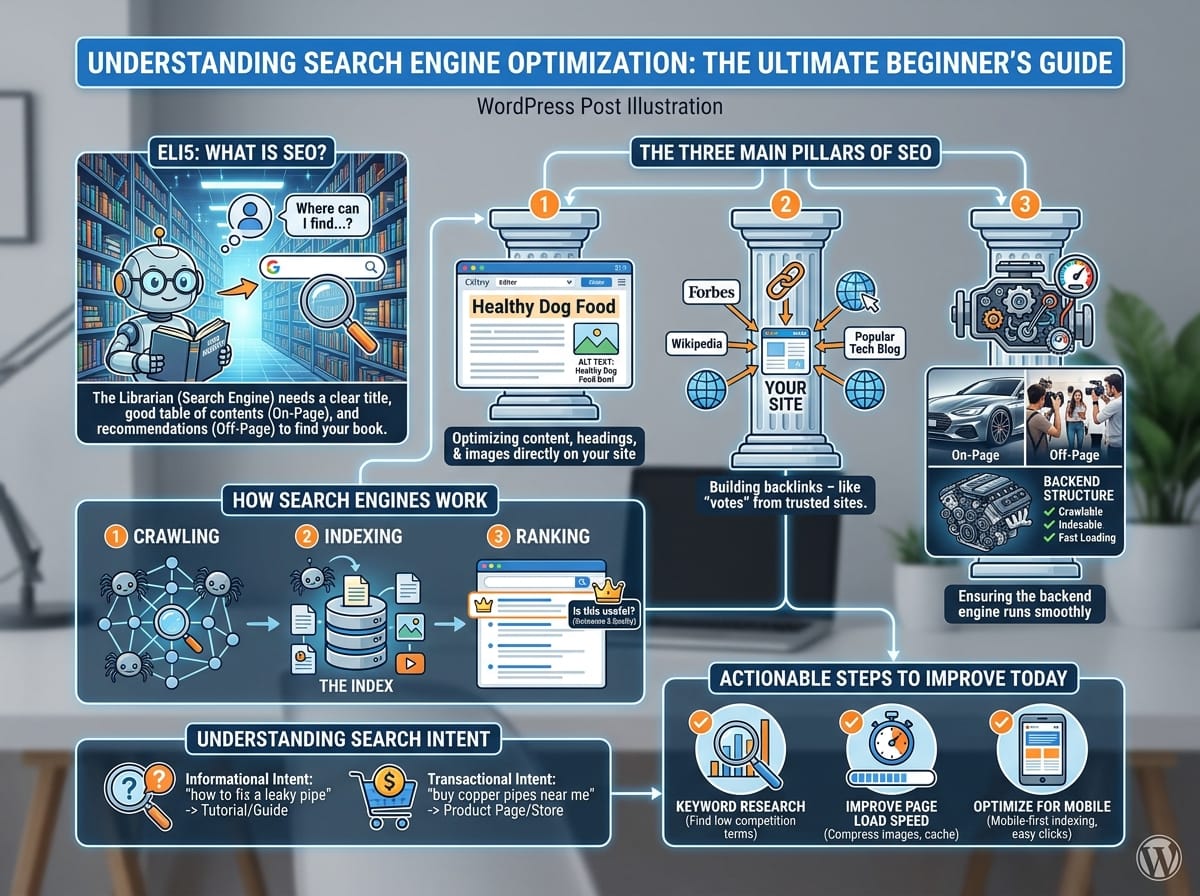
Explain Like I’m 5 (ELI5): Imagine the internet is a massive, global library with billions of books, but there is no central computer to look up where a book is located. A search engine (like Google) is the ultra-fast librarian. SEO is simply the process of putting the right title on the cover of your book, writing a clear table of contents, and having other people recommend your book so the librarian knows exactly what your book is about and recommends it to readers who ask for it.
The Three Main Pillars of SEO
To successfully rank on search engines, your strategy needs to be built on three core pillars. Missing even one of these can prevent your site from reaching its full potential.
1. On-Page SEO
On-page SEO refers to everything you do directly on your website’s pages to help search engines understand your content. This includes optimizing your text, headings, and images.
Example: If you are writing a blog post about “Healthy Dog Food,” you would want to ensure that the phrase “healthy dog food” appears in your main headings, naturally throughout your paragraphs, and in the text describing your images (alt text).
2. Off-Page SEO
Off-page SEO involves actions taken outside of your own website to impact your rankings. The most important part of off-page SEO is building backlinks—which are links from other websites pointing to yours.
ELI5: Backlinks Think of a backlink like a vote in a school election. If the most popular kids in school (highly trusted, big websites like Forbes or Wikipedia) vote for you (link to your site), the principal (Google) will trust you more and make you the class president (put you at the top of the search results).
3. Technical SEO
Technical SEO focuses on the backend structure of your website. It ensures that search engines can easily crawl, index, and load your website without running into errors.
ELI5: Technical SEO Imagine your website is a car. On-page SEO is the beautiful paint job and the comfortable seats. Off-page SEO is the people taking pictures of your car because it looks so cool. Technical SEO is the engine under the hood. If the engine is broken, it doesn’t matter how pretty the car is; it isn’t going anywhere.
How Search Engines Actually Work
To optimize for search engines, you must understand the three steps they take to organize the internet:
Crawling
Search engines send out automated bots (often called spiders) to scour the internet. They follow links from one page to another, discovering new content along the way.
Indexing
Once a bot finds a page, the search engine analyzes the content, images, and video files. If the content is deemed valuable and accessible, it is stored in a massive database called the Index.
Ranking
When a user types a query into the search bar, the search engine digs through its Index to find the most relevant, high-quality results. It then orders them from most useful to least useful. This ordering is what we call ranking.
Understanding Search Intent
Search intent is the why behind a search query. Google’s main goal is to satisfy the user, so your content must match what the user is actually trying to accomplish.
Example:
- Informational Intent: A user searches “how to fix a leaky pipe.” They want a tutorial or a guide, not a product page.
- Transactional Intent: A user searches “buy copper pipes near me.” They are ready to spend money, so they want a product page or a local store directory, not a blog post.
Actionable Steps to Improve Your Website’s SEO Today
Ready to start climbing the search results? Here are a few foundational steps you can implement right now:
Conduct Keyword Research
Use tools like Google Keyword Planner or Ahrefs to find out exactly what words your target audience is typing into Google. Look for terms with high search volume but low competition.
Improve Your Page Load Speed
Users hate slow websites, and so do search engines. Compress your large image files, utilize browser caching, and upgrade your web hosting if necessary to ensure your pages load in under three seconds.
Optimize for Mobile Devices
More than half of all internet traffic comes from mobile phones. Google now uses mobile-first indexing, meaning they look at the mobile version of your site to determine how to rank it. Ensure your website design is responsive and buttons are easy to click on a small screen.
Final Thoughts on SEO
SEO is not a one-time task; it is an ongoing strategy. It takes time for search engines to index your site, recognize your authority, and push you up the ranks. By focusing on creating incredibly valuable content (On-page), getting others to vouch for you (Off-page), and ensuring your site runs smoothly (Technical), you will build a sustainable source of organic traffic that can grow your business for years to come.