

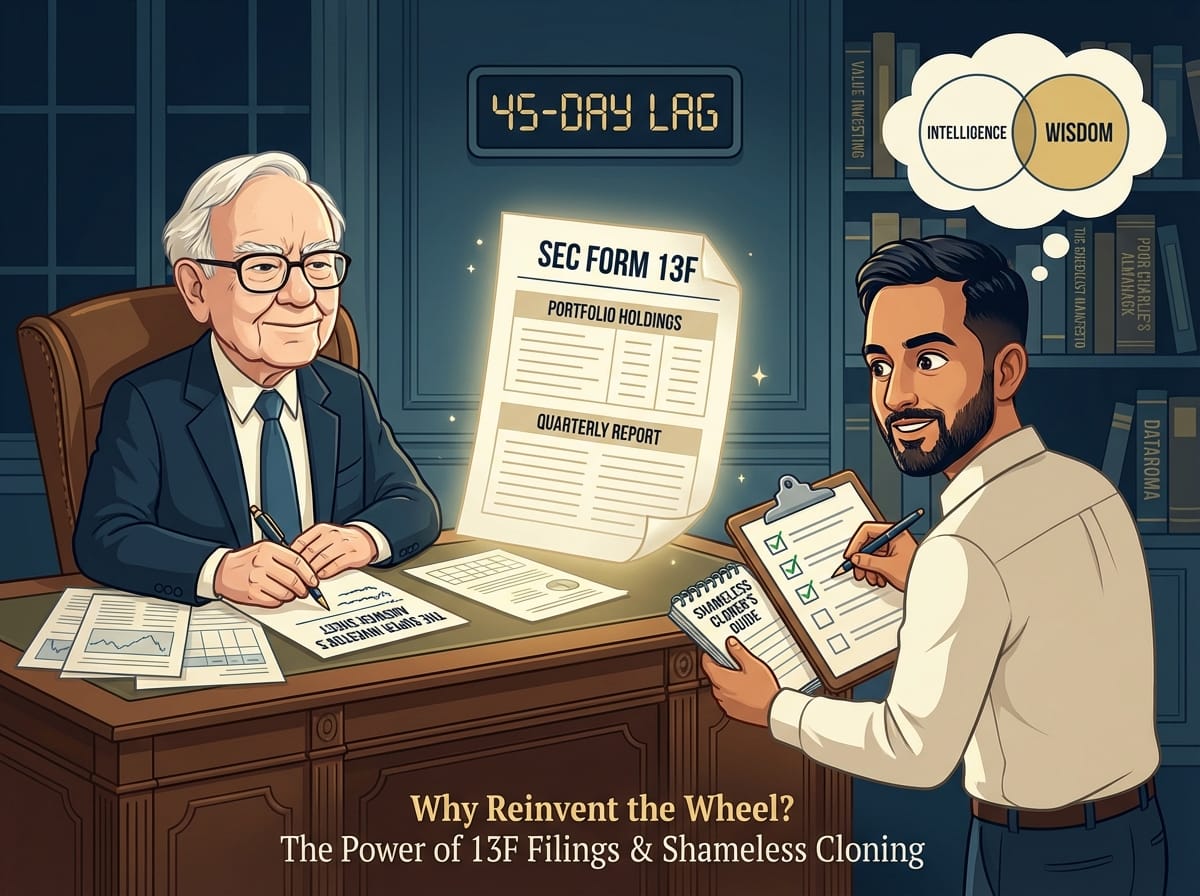
In a world obsessed with innovation and “the next big thing,” we are often taught that originality is the only path to success. However, in the high-stakes world of stock market investing, being original can be dangerous—and expensive. Enter Mohnish Pabrai, a legendary investor who turned a relatively small sum into a massive fortune not by inventing a new strategy, but by proudly calling himself a “Shameless Cloner.”
Pabrai’s philosophy is simple: Why reinvent the wheel when you can drive the car built by a genius? By studying Warren Buffett, Charlie Munger, and other “super investors,” Pabrai cracked the code on how to legally copy the homework of the world’s smartest minds.
This guide will break down the Mohnish Pabrai method, explain what 13F filings are, and show you how to use them to upgrade your investing strategy.
Who is Mohnish Pabrai and Why Should You Copy Him?
Mohnish Pabrai is the managing partner of the Pabrai Investment Funds. He famously paid over $650,000 for a charity lunch with Warren Buffett, a meeting he claims was worth every penny because it solidified his investing philosophy.
Pabrai realized early on that Warren Buffett didn’t just get lucky; he had a system. Instead of trying to create a better system, Pabrai decided to replicate Buffett’s partnership structure and investment style entirely. The result? From 1999 to 2018, his funds delivered a massive return, crushing the S&P 500 significantly over long stretches.
The “Checklist” Manifesto
Pabrai doesn’t just copy stock picks; he copies discipline. He is famous for using a rigorous checklist before buying any stock, a method he adapted from the aviation and medical industries to prevent “pilot error” in investing.
The Concept of “Shameless Cloning”
The term “Shameless Cloner” isn’t an insult; it is a badge of honor in the value investing community. It acknowledges a simple truth: Intelligence is good, but wisdom is better. Wisdom lies in recognizing that someone else has already figured out the answer.
ELI5 (Explain Like I’m 5): Imagine you are taking a very difficult math test. The smartest kid in school (let’s call him Warren) is sitting right next to you. The teacher (the SEC) has a rule: Warren is allowed to show you his answer sheet, but only after he has finished writing his answers. If you want to get an ‘A’, should you try to guess the answers yourself, or should you look at what Warren wrote?
Pabrai chooses to look at the answers. In the stock market, these “answer sheets” are called 13F Filings.
What is a 13F Filing? (The Secret Weapon)
To be a cloner, you need a source. That source is the Securities and Exchange Commission (SEC) Form 13F.
A 13F is a quarterly report that is required to be filed by all institutional investment managers with over $100 million in qualifying assets. This includes hedge funds, trust companies, and pension funds. In these reports, they must disclose their U.S. equity holdings to the public.
The Mechanics of the 13F
- Who files? Any fund managing more than $100M.
- What is listed? The stocks they own and how many shares they hold.
- When is it filed? Within 45 days after the end of each quarter.
The 45-Day Lag (The Catch)
This is the only downside. The data is not real-time. If Warren Buffett buys a stock on January 1st, and the quarter ends on March 31st, he doesn’t have to tell the public until May 15th.
However, for long-term investors like Pabrai, this lag rarely matters. Value investors hold stocks for years, not days. Seeing what they bought 45 days ago is still incredibly valuable information.
How to Clone Like Mohnish Pabrai: A Step-by-Step Guide
You don’t need a Bloomberg terminal or expensive software to follow this strategy. Here is how you can implement the “Shameless Cloning” method today.
Step 1: Identify Your “Super Investors”
You shouldn’t copy just anyone. You want to copy investors who share your timeline and philosophy. If you are a long-term investor, don’t copy a high-frequency trader.
Classic Super Investors to Watch:
- Warren Buffett (Berkshire Hathaway)
- Mohnish Pabrai (Pabrai Funds)
- Li Lu (Himalaya Capital)
- Guy Spier (Aquamarine Fund)
- Seth Klarman (Baupost Group)
Step 2: Use Aggregator Tools
While you can read raw 13F filings on the SEC website, it is tedious. Several free websites aggregate this data into easy-to-read charts.
- Dataroma: The most popular tool for cloners. It tracks the “Super Investors” and shows you exactly what they are buying and selling.
- WhaleWisdom: Offers deep analytics on hedge fund performance.
Step 3: Look for “High Conviction” Bets
Mohnish Pabrai often runs a concentrated portfolio, meaning he only holds a few stocks (sometimes less than 10). When a fund manager puts 20% of their entire portfolio into one stock, they are screaming that they have high conviction in that idea.
The Strategy: Ignore the small 0.5% positions. Look for the massive buys where the manager is putting their reputation on the line.
The Dangers of Cloning (Read This Before Buying)
While cloning is powerful, it is not foolproof. Pabrai warns that you cannot clone blindly. You must understand why the investor bought the stock.
1. The Difference in Capital Base
Warren Buffett manages billions. He cannot buy small companies because they wouldn’t move the needle for him. As a small investor, you have an advantage: you can buy smaller companies. Sometimes, cloning a mega-investor means you are only buying large, slow-growing companies.
2. The “Selling” Problem
You will know when they buy a stock (45 days later), but you will also know when they sell a stock 45 days late. If a fundamental shift happens in the business and the Super Investor dumps the stock, you might be left holding the bag for a month and a half before you realize they have exited.
3. Thesis Drift
ELI5: Imagine you copy Warren’s answer, but the question on the test changes halfway through. Warren notices and changes his answer, but you don’t.
Even if you buy the same stock as Pabrai, you need to do your own basic research to understand what the company does and why it is undervalued. This is your “Circle of Competence.” Never buy something you don’t understand, even if a genius bought it first.
Summary: The Free Lunch in Investing
Mohnish Pabrai proves that you don’t need to be the smartest person in the room to get the best returns; you just need to be humble enough to recognize who the smartest person is.
By utilizing 13F filings and adopting the mindset of a “Shameless Cloner,” you effectively hire the world’s greatest team of analysts to work for you—for free. Monitor the filings, look for high-conviction buys, verify the thesis, and hold for the long term.