
Understanding Real Estate Ownership in Florida
Buying property in the Sunshine State is an exciting milestone, but the paperwork can often feel overwhelming. One of the most critical decisions you will make during the closing process is how you will take ownership of the property. In real estate, this is known as holding title.
Choosing the right type of title and ownership structure impacts everything from your property taxes and inheritance to how well your assets are protected from creditors. In this guide, we will break down the different types of title in Florida and the various ways you can hold title with others.
What Exactly is a “Title”?
Before diving into the types of ownership, it is important to understand what a title actually is, as it is frequently confused with a deed.
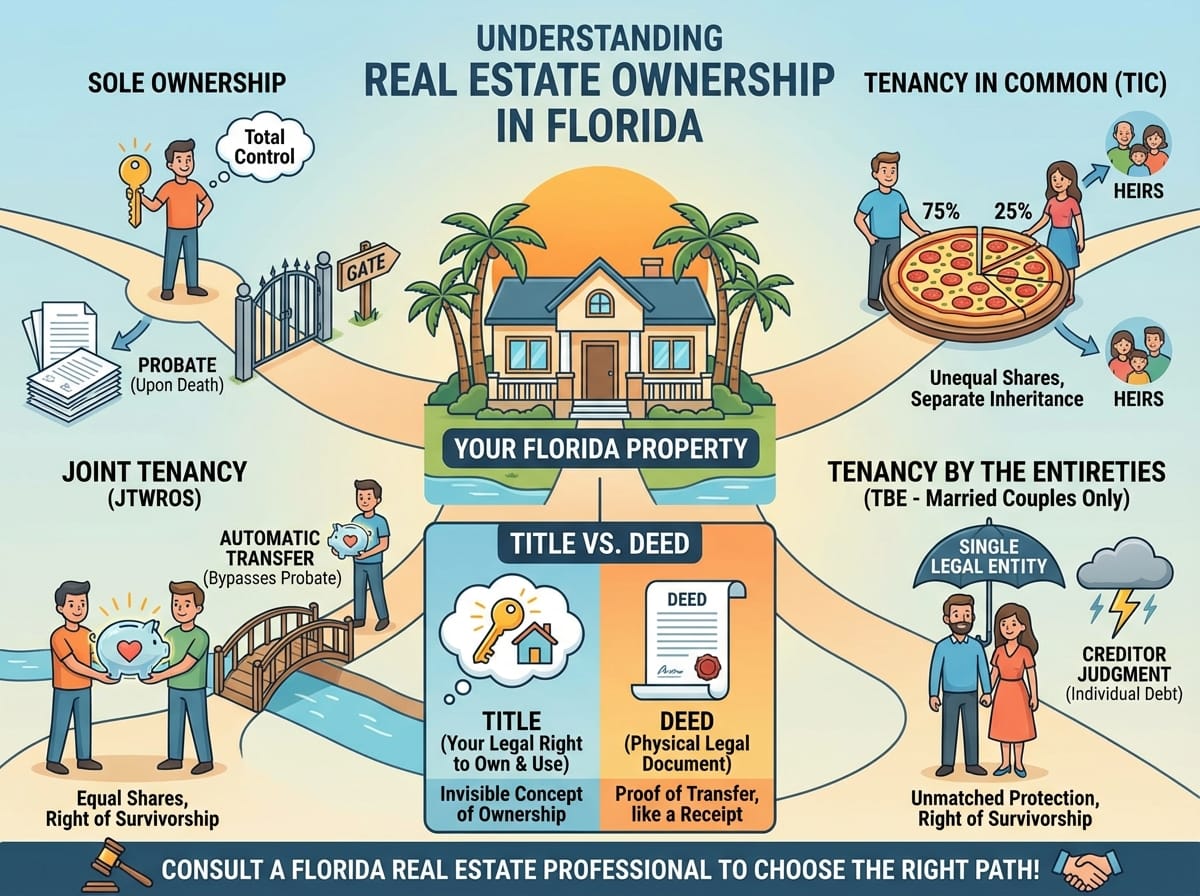
ELI5 (Explain Like I’m 5): Imagine you buy a brand new toy. The title is the invisible concept that the toy belongs to you and no one else can play with it without your permission. The deed is the physical store receipt that proves you bought it.
In real estate, a title represents your legal right to own, use, and sell a property. The deed is the physical legal document that transfers that title from the seller to you.
Different Types of Title in Florida
When you own real estate, the “type” of title refers to the duration and extent of your ownership rights. Here are the most common types of property estates in Florida:
Fee Simple Absolute
This is the most common and complete form of property ownership in Florida. When you buy a standard single-family home, you are likely receiving a fee simple absolute title.
ELI5: You own the house, the dirt it sits on, and the air above it. You can keep it forever, sell it, or pass it on to your kids. There are no strings attached (other than paying your taxes and mortgage!).
Example: John buys a house in Orlando. He has absolute ownership. He can paint it pink, tear it down, or leave it to his daughter in his will.
Life Estate
A life estate gives someone the right to own and live in a property only for the duration of their lifetime. Once they pass away, the ownership automatically transfers to another designated person (called the remainderman).
Example: Sarah wants her elderly mother to have a place to live for the rest of her life, but wants the property to eventually go to Sarah’s son. Sarah grants her mother a life estate. Her mother owns the home until she passes, at which point full ownership instantly transfers to Sarah’s son.
Leasehold Estate
While not a true “ownership” of the land, a leasehold estate means you own the right to use a property for a very long, specific period of time (often 99 years). This is common in some commercial real estate or specific mobile home parks.
Different Ways to Hold Title in Florida
While the type of title dictates what you own, the way you hold title dictates how you share that ownership with others. This is also known as concurrent ownership. Florida law allows for several ways to hold title.
Sole Ownership
This is the simplest way to hold title. Property is held by one single individual or a single business entity.
- Pros: You have total control over the property. You can sell or mortgage it without needing anyone else’s permission.
- Cons: If you pass away, the property must go through the probate process to be transferred to your heirs.
Tenancy in Common (TIC)
Tenancy in Common is the default way unmarried people hold title together in Florida unless specified otherwise. In a TIC, two or more people own a fractional share of the property. The shares do not have to be equal.
ELI5: Think of buying a pizza with a friend. You paid for 75% of it, so you own 6 slices, and your friend owns 2 slices. You share the whole pizza box, but you legally own different amounts. If you leave the room, you can give your 6 slices to anyone you want; your friend doesn’t automatically get them.
Example: Alex and Ben buy an investment condo. Alex puts down 60% of the money, and Ben puts down 40%. They hold title as Tenants in Common. If Alex passes away, his 60% share goes to his children through his will, not to Ben.
Joint Tenancy with Right of Survivorship (JTWROS)
In a Joint Tenancy, two or more people own equal shares of a property. The key feature here is the “Right of Survivorship.” This means if one owner dies, their share automatically and instantly passes to the surviving owner(s), completely bypassing probate.
ELI5: You and your brother share a magic piggy bank. You both own the whole thing equally. If your brother goes away forever, his claim to the piggy bank disappears, and you automatically become the sole owner of the whole piggy bank.
Example: Unmarried partners, Mark and Lisa, buy a home together as Joint Tenants. Mark suddenly passes away. Lisa immediately becomes the 100% sole owner of the house. Mark’s family cannot claim his half of the house, even if he wrote it in his will.
Tenancy by the Entireties (TBE)
This is a special way to hold title that is only available to legally married couples in Florida. Under TBE, the law views the married couple not as two separate people sharing a property, but as one single legal entity.
- Right of Survivorship: Like Joint Tenancy, if one spouse dies, the other automatically owns the whole property without going through probate.
- Creditor Protection: This is the biggest benefit of TBE in Florida. If a creditor gets a judgment against only one spouse (e.g., one spouse gets into a car accident and is sued), that creditor cannot put a lien on or seize the TBE property. A creditor can only touch the property if the debt is owed by both spouses.
Example: David and Maria are married and own their house as Tenants by the Entireties. David has a failing business and owes a vendor $50,000. The vendor sues David. Because the house is owned by both David and Maria as a single married entity, the vendor cannot force the sale of the house to pay David’s individual debt.
Ownership Through an Entity or Trust
Instead of holding title in your personal name, you can hold it through an entity:
- Living Trust: You transfer the title to a trust. This avoids probate, keeps your affairs private, and allows for seamless transfer to beneficiaries upon death.
- LLC (Limited Liability Company): Commonly used by real estate investors. It protects the owner’s personal assets from lawsuits arising from the property (like a tenant slipping and falling).
How to Choose the Right Way to Hold Title
Choosing how to hold title in Florida should never be an afterthought. Your choice dictates your legal liabilities, what happens to your property when you die, and how protected you are from lawsuits. When deciding, ask yourself:
- Are you married? (If so, Tenancy by the Entireties offers unmatched protections).
- Are you buying with an investment partner? (Tenancy in Common allows for unequal ownership shares).
- Do you want your co-owner to inherit your share, or do you want it to go to your children? (Joint Tenancy vs. Tenancy in Common).
- Do you want to avoid probate entirely? (Consider a Trust or Joint Tenancy).
Always Consult a Professional
Florida real estate laws can be complex, and trying to change a title after the fact can trigger unintended tax consequences or require a mountain of paperwork. Always consult with a licensed Florida real estate attorney or a title professional before closing to ensure your property is protected exactly the way you intend.